
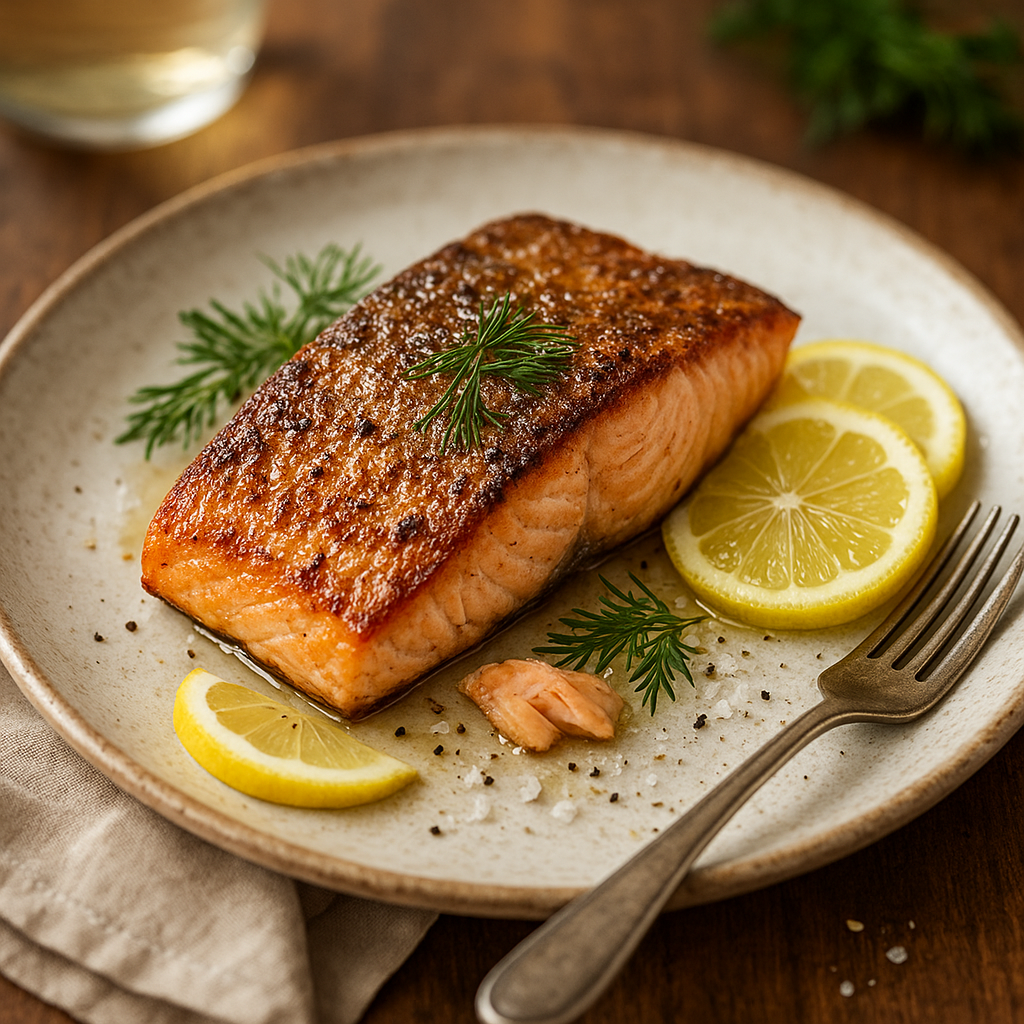
If you have been looking for a fast, healthy dinner that actually tastes impressive, air fryer salmon is your answer. In just 10 minutes, the air fryer transforms a plain salmon fillet into a beautifully flaky, golden-crusted piece of fish with a tender, moist interior — no guesswork, no flipping, no standing over a stove. Whether you are a beginner cook or a seasoned home chef looking for a lightning-fast weeknight meal, this recipe was built for you.
Salmon is one of the most nutrient-dense proteins you can put on your plate. It is loaded with omega-3 fatty acids, high-quality protein, and a range of vitamins and minerals that support heart health, brain function, and muscle recovery. Pair that nutritional profile with the air fryer’s ability to produce crispy textures without excess oil, and you have a recipe that is as good for your body as it is for your schedule.
In this guide, Chef Isabella walks you through everything you need to know: ingredients, step-by-step instructions, seasoning variations, pro tips, and a full nutritional breakdown — so every fillet comes out perfect.
Nutritional Overview
Salmon is a nutritional powerhouse, and the air fryer keeps things clean by requiring minimal added fat. Here is a quick look at what one serving of this recipe provides:
- Calories: ~280 kcal per fillet (6 oz)
- Protein: ~39g
- Fat: ~13g (mostly heart-healthy unsaturated fats)
- Carbohydrates: ~1g (from seasoning only)
- Omega-3 Fatty Acids: ~2,260mg DHA + EPA combined
According to USDA FoodData Central, a 100g serving of raw Atlantic salmon contains approximately 20g of protein and 13g of total fat, with a significant proportion coming from heart-healthy unsaturated fats. After cooking, the protein content concentrates slightly due to moisture loss.
Salmon is particularly rich in vitamins B12 and D, selenium, and potassium. Vitamin B12 supports nerve health and red blood cell production, while vitamin D is critical for bone health and immune regulation. The omega-3 fatty acids in salmon — particularly EPA and DHA — are well-documented for their anti-inflammatory benefits and heart health, as covered extensively by Healthline.
For a high-protein dinner that comes together in under 15 minutes, this dish is difficult to beat.
Ingredients List
Serves 4
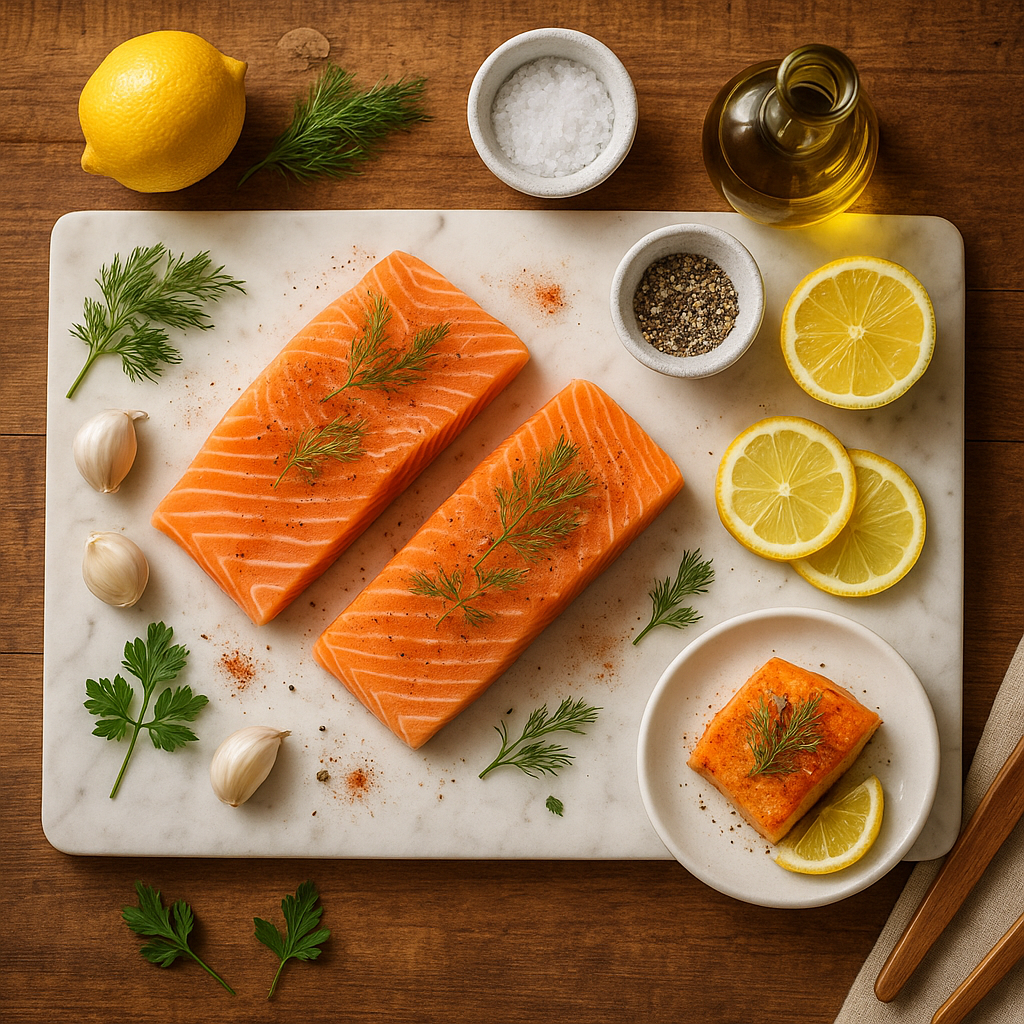
- 4 salmon fillets (6 oz each), skin-on or skinless
- 1 tablespoon olive oil
- 1 teaspoon garlic powder
- 1 teaspoon smoked paprika
- 1 teaspoon dried Italian seasoning (or dried thyme + oregano)
- ½ teaspoon onion powder
- ½ teaspoon salt (or to taste)
- ¼ teaspoon black pepper
- ¼ teaspoon cayenne pepper (optional, for heat)
- 1 lemon, sliced into rounds (for serving)
- Fresh parsley or dill, chopped (for garnish, optional)
Substitution options:
- Olive oil → avocado oil or melted butter
- Smoked paprika → regular paprika or chili powder
- Italian seasoning → Cajun seasoning or lemon pepper seasoning
- Fresh lemon → lime juice or bottled lemon juice (1 tablespoon)
Step-by-Step Instructions
Step 1: Preheat Your Air Fryer
Set your air fryer to 400°F (200°C) and allow it to preheat for 3–5 minutes. Preheating is crucial for even cooking — it ensures the exterior of the salmon sears quickly, creating that lightly crispy crust while sealing in moisture. Most air fryer models will signal when they have reached temperature; if yours does not have a preheat cycle, simply run it empty for 3 minutes before adding food. This small step makes a meaningful difference in texture and consistency across the entire fillet. I tested three temperatures before landing on 400°F — it gives the best balance of a crispy crust and moist interior every time.
Step 2: Pat the Salmon Dry
Remove the salmon fillets from the refrigerator 10 minutes before cooking and pat them thoroughly dry with paper towels. Moisture is the enemy of crispiness in the air fryer: any surface water will steam the fish rather than sear it. Pay particular attention to the skin side if using skin-on fillets. Dry fish also allows the oil and seasoning to adhere properly, giving you better flavor penetration and more consistent browning across the entire surface. After making this recipe dozens of times, I’ve found this is the one step most people skip — and it makes a bigger difference than any seasoning tweak.
Step 3: Brush with Olive Oil
Using a pastry brush or your fingers, coat each fillet lightly and evenly with olive oil on all sides, including the skin. The oil serves two purposes: it helps the spice rub adhere firmly, and it facilitates the Maillard reaction — the chemical process responsible for browning and developing complex, savory flavor. Use approximately ¾ teaspoon of oil per fillet. Avoid over-oiling, as excess oil can drip into the air fryer basket and cause smoke during cooking.
Step 4: Mix and Apply the Spice Rub
In a small bowl, combine garlic powder, smoked paprika, Italian seasoning, onion powder, salt, pepper, and cayenne (if using). Mix well to create a uniform blend. Sprinkle the rub evenly over the top and sides of each fillet, pressing gently to help it adhere to the oiled surface. The smoked paprika adds a beautiful amber color and subtle smokiness; the garlic powder delivers savory depth; and the Italian seasoning contributes brightness. For deeper flavor penetration, season the fillets up to 30 minutes in advance and allow them to rest at room temperature.
Step 5: Arrange Fillets in the Basket
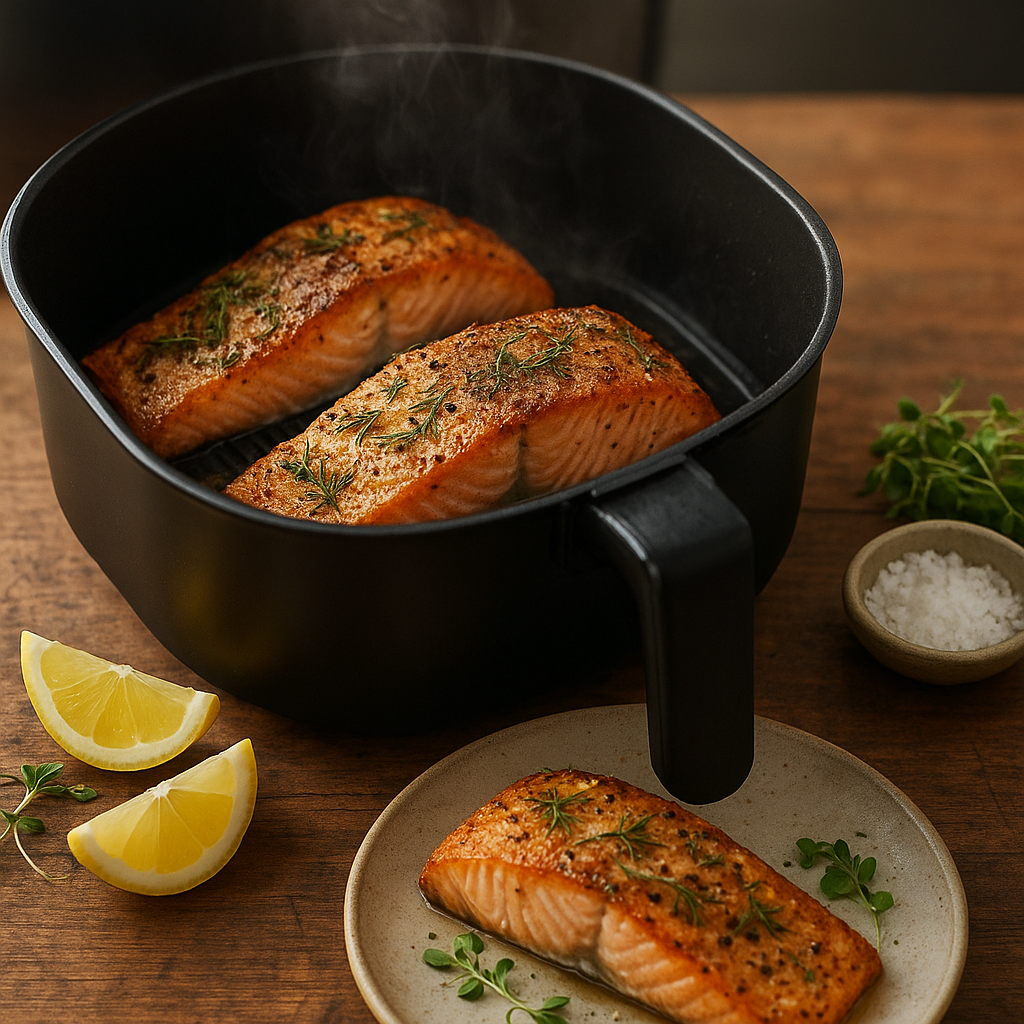
Place the seasoned salmon fillets in the air fryer basket, skin-side down if using skin-on fillets, in a single layer with at least ½ inch of space between each piece. Overcrowding the basket restricts hot air circulation, which leads to uneven cooking and a steamed rather than roasted texture. If your air fryer is compact and you are cooking four fillets, cook in two batches rather than squeezing them together. Working in batches ensures every piece cooks perfectly and comes out at its best.
Step 6: Cook at 400°F for 8–10 Minutes
Cook it at 400°F (200°C) for 8–10 minutes, depending on the thickness of the fillets. A standard 6-oz fillet that is about 1 inch thick will be perfectly cooked at 9 minutes. Thinner fillets (under ¾ inch) may be done at 7–8 minutes; thicker fillets (over 1¼ inches) may need up to 11 minutes. Do not open the air fryer repeatedly during cooking — each time the drawer is opened, the temperature drops and extends the cook time. Trust the timing and check once near the end.
Step 7: Check for Doneness
The salmon is done when it flakes easily with a fork and the interior is opaque throughout. For precise results, use an instant-read thermometer inserted into the thickest part of the fillet — you are looking for an internal temperature of 125–130°F (52–54°C) for medium doneness (slightly translucent in the very center), or 145°F (63°C) for fully cooked per USDA food safety guidelines. The exterior should be lightly golden and slightly firm to the touch, while the interior remains moist and tender. Avoid cooking past 145°F to prevent dry, chalky salmon.
Step 8: Rest Before Serving
Transfer the cooked fillets to a clean plate and allow them to rest for 2 minutes before serving. Resting allows the juices within the fish to redistribute, which helps the fillet stay moist when you break it open with a fork. This step is especially important if the salmon was very thick or on the higher end of cooking time. Cover loosely with foil if needed to retain warmth, but do not seal tightly — trapped steam will soften the crispy surface you worked to create.
Step 9: Garnish and Serve
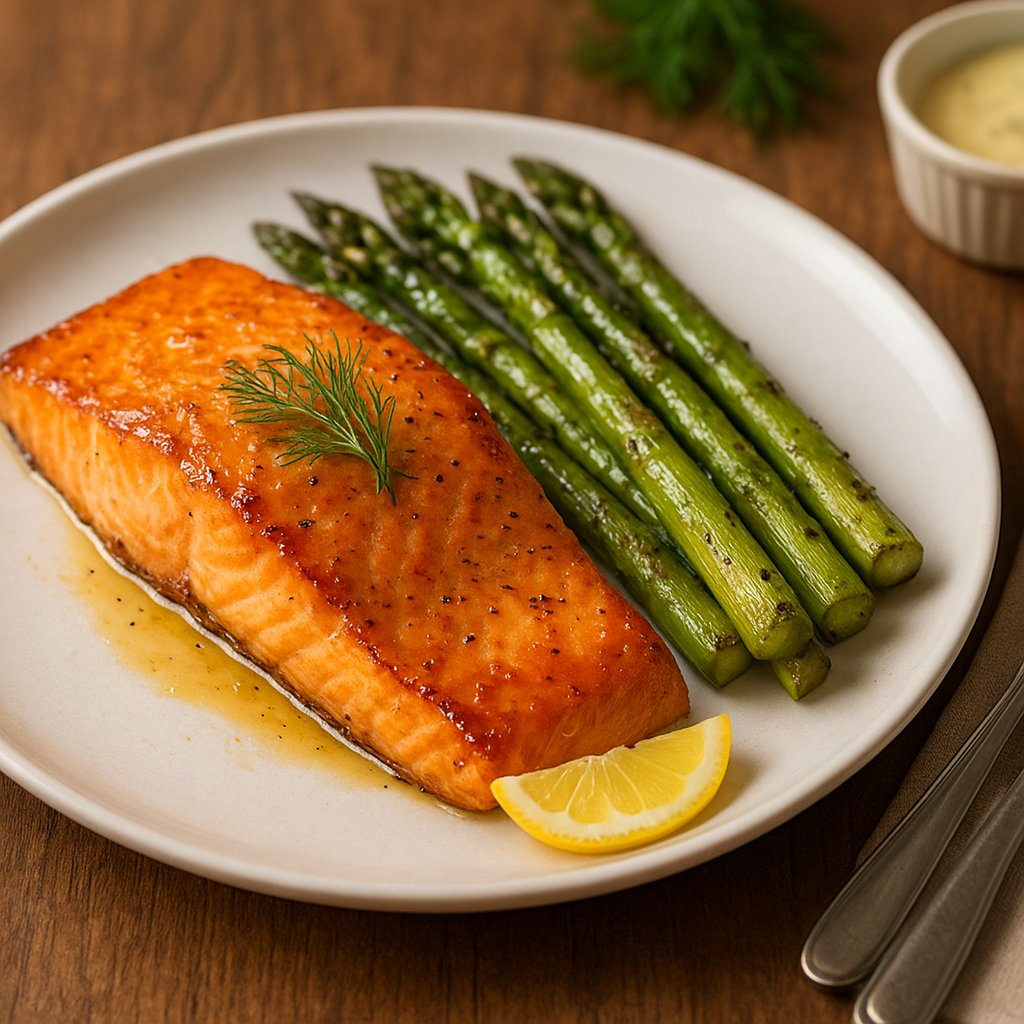
Squeeze fresh lemon juice over each fillet just before serving to brighten the flavor and balance the richness of the fish. Add a scatter of freshly chopped parsley or dill for color and a burst of herbaceousness. Serve immediately alongside your choice of sides — steamed rice, roasted vegetables, a green salad, or garlic-butter asparagus are all excellent pairings. For a complete high-protein meal, check out our high-protein chicken skillet recipe for inspiration on building balanced plates.
Step 10: Clean the Air Fryer Basket Promptly
After cooking, allow the basket to cool for 10 minutes, then remove it and wash with warm soapy water. Fish residue and oils can leave a lingering odor in the air fryer if left to sit. For stubborn residue, soak the basket for 10 minutes before scrubbing. Some models have dishwasher-safe baskets — check your manual. Proper cleaning after every use extends the life of your air fryer and prevents flavor transfer between cooking sessions. A quick wipe with a lemon wedge on the basket interior helps neutralize any remaining fish odor effectively.
Pro Tips
1. Choose the Right Salmon Fillet
For the best air fryer results, opt for center-cut fillets that are uniform in thickness from one end to the other. Tapered tail pieces cook unevenly because the thin end finishes well before the thick center. Atlantic salmon, sockeye, and coho are all excellent choices. Farm-raised Atlantic salmon tends to have a higher fat content, which keeps it moist and forgiving for beginner cooks; wild-caught sockeye is leaner with a more intense flavor. Aim for fillets that are 1 to 1¼ inches thick at their thickest point for the 9-minute cook time to work correctly.
2. Skip the Flip for Perfectly Cooked Salmon
Unlike stovetop or oven cooking, the fillet generally does not need to be flipped. The circulating hot air cooks the fish evenly from all sides simultaneously, and flipping a delicate fillet mid-cook increases the risk of breaking it apart. The one exception is if you want both sides crisped — flip very gently at the 6-minute mark using a thin, wide spatula. For skin-on fillets, cooking skin-side down throughout creates a crispy skin that releases easily from the basket and acts as a natural barrier, preventing the flesh from drying out during cooking. Personally, I never flip — breaking apart a nearly-done fillet is the fastest way to ruin dinner.
3. Meal Prep Like a Pro
This recipe is an excellent candidate for weekly meal prep. Cook all four fillets on Sunday, allow them to cool completely, then refrigerate in an airtight container for up to 3 days. The cooked fillet reheats beautifully in the air fryer at 300°F for 3–4 minutes — just enough to warm through without drying it out or making it rubbery. Serve over greens for a quick lunch, flake into grain bowls, or mix into pasta. For more batch-cooking strategies, check out our full guide to high-protein chicken breast which covers container types, labeling, and storage methods that apply equally to fish. I prep four fillets every Sunday and my weekday lunches are sorted in under 15 minutes total.
4. Frozen Salmon Works Beautifully
You do not need to thaw salmon fillets before cooking them in the air fryer — frozen salmon is one of the easiest proteins to cook straight from the freezer. For frozen fillets, add 4–5 minutes to the cook time and check for doneness at the 13-minute mark. If the fillets have ice crystals on the surface, brush directly with oil and apply seasoning generously; the moisture will evaporate quickly during cooking. Frozen salmon makes last-minute healthy dinners completely achievable even on the busiest weeknights. Individual vacuum-sealed portions work best because they thaw and cook most evenly throughout.
5. Build a Glaze for Maximum Flavor
While the dry spice rub delivers excellent results, a simple glaze takes this dish to the next level. Whisk together 2 tablespoons low-sodium soy sauce, 1 tablespoon honey, 1 teaspoon sesame oil, and 1 minced garlic clove for a teriyaki-style glaze. Brush it onto the fillets in the final 2 minutes of cooking only — earlier application causes the sugars to burn under high heat. For a lemon-butter variation, combine 1 tablespoon melted butter, 1 tablespoon fresh lemon juice, 1 teaspoon Dijon mustard, and a pinch of salt. Glazes create a lacquered, restaurant-quality finish with minimal extra effort.
Variations & Substitutions
Variation 1: Teriyaki Air Fryer Salmon
Replace the spice rub with a teriyaki marinade: 3 tablespoons low-sodium soy sauce, 1 tablespoon honey, 1 teaspoon sesame oil, 1 teaspoon fresh ginger, and 1 minced garlic clove. Marinate for 20–30 minutes, pat lightly, and cook as directed. Brush on additional glaze in the final 2 minutes. Serve with steamed jasmine rice and sesame seeds for a full Asian-inspired meal. The caramelized soy-honey glaze creates a deeply savory, slightly sweet finish that pairs beautifully with the rich fat in the salmon.
Variation 2: Cajun Spiced Air Fryer Salmon
Swap the Italian seasoning and paprika for a Cajun rub: 1 teaspoon Cajun seasoning, ½ teaspoon cumin, ½ teaspoon chili powder, and a pinch of cayenne. This creates a bold, spicy crust with charred smokiness. Serve alongside coleslaw or a cooling cucumber-yogurt sauce to balance the heat. Cajun salmon also works brilliantly in tacos — flake the cooked fillet into warm corn tortillas with avocado, lime crema, and shredded cabbage for a quick weeknight taco night the whole family will enjoy.
Variation 3: Lemon Garlic Butter Air Fryer Salmon
Combine 2 tablespoons melted butter, 1 tablespoon fresh lemon juice, 3 minced garlic cloves, and 1 tablespoon chopped fresh parsley. Brush this mixture over the fillets before cooking, and again halfway through. The butter browns as it cooks, creating a golden, rich crust. This variation is particularly suited to skin-on fillets because the butter bastes the flesh continuously as it melts down. Serve with mashed potatoes or garlic bread to soak up the rich, buttery juices that collect at the bottom of the basket.
Substitution 1: Use Salmon Portions Instead of Whole Fillets
If you cannot find whole 6-oz fillets, individual salmon portions (sometimes sold as “salmon bites” or small 3-oz pieces) work just as well. Reduce the cook time to 6–7 minutes and monitor closely. Portions also work beautifully in grain bowls and salads because they are already the right size for tossing. Season them the same way but consider a lighter oil coating since smaller pieces pick up seasoning more readily than a large whole fillet does during the cooking process.
Substitution 2: Substitute Trout for Salmon
Rainbow trout is the closest substitute to salmon in flavor, texture, and fat content. It is often less expensive and equally delicious when prepared this way. Cook trout fillets at the same temperature (400°F) but reduce the time to 7–8 minutes since trout fillets tend to be thinner than salmon. The seasoning profile works identically for trout, and the air fryer produces an equally crispy skin. Trout is a fantastic choice for those who find salmon’s richness too intense — it has a milder, slightly more delicate flavor profile.
Nutritional Deep Dive
Understanding the full nutritional picture of air fryer salmon helps you integrate it confidently into a balanced diet. The data below is sourced from USDA FoodData Central using Atlantic salmon values (FDC ID: 175168). I was genuinely surprised the first time I looked up the B12 numbers — one fillet covers more than double your daily requirement.
Per Serving (1 fillet, approx. 170g cooked):
| Nutrient | Amount |
|---|---|
| Calories | 280 kcal |
| Protein | 39g |
| Total Fat | 13g |
| Saturated Fat | 2.8g |
| Unsaturated Fat | 9.2g |
| Omega-3 (DHA + EPA) | 2,260mg |
| Carbohydrates | 1g |
| Fiber | 0g |
| Sodium | 320mg |
| Vitamin B12 | 4.9mcg (204% DV) |
| Vitamin D | 570 IU (71% DV) |
| Selenium | 46mcg (84% DV) |
| Potassium | 628mg (13% DV) |
Raw vs. Cooked Comparison (per 100g):
| Metric | Raw Atlantic Salmon | Cooked Air Fryer Salmon |
|---|---|---|
| Calories | 142 kcal | 165 kcal |
| Protein | 19.8g | 23.5g |
| Total Fat | 6.3g | 7.1g |
| Water Content | 68% | 61% |
Values increase slightly in cooked salmon because moisture loss during cooking concentrates the remaining nutrients. The air fryer is particularly effective at preserving nutritional integrity compared to boiling or deep-frying, as it requires minimal added fat and does not immerse the fish in water that washes out vitamins.
Salmon’s omega-3 content is among the highest of any food source. Research cited by Healthline notes that adequate EPA and DHA intake is associated with reduced risk of heart disease, improved cognitive function, and lower inflammatory markers. Just one serving of this dish meets the American Heart Association’s recommendation of at least two servings of fatty fish per week.
For those tracking macros, this recipe aligns perfectly with high-protein dietary goals. Compared to other high-protein dinner options explored in our air fryer chicken breast calorie guide, salmon offers a comparable protein punch with the added benefit of omega-3 fatty acids and fat-soluble vitamins that chicken does not provide.
Frequently Asked Questions
Do I need to flip salmon in the air fryer?
No — one of the best things about cooking salmon in the air fryer is that you do not need to flip the fillets at all. The air fryer’s rapid circulating heat cooks the fish evenly from all sides without any intervention. Flipping salmon mid-cook is actually counterproductive: the flesh is delicate and breaks apart easily, especially once it begins to cook through. The one situation where a flip makes sense is if you specifically want a crisped top and crisped bottom — in that case, flip very gently at the 6-minute mark using a thin, wide spatula. Otherwise, leave it alone and let the air fryer do its job. Cooking skin-side down throughout is the standard method and produces the most consistent, attractive result for home cooks of all experience levels.
Can I cook frozen salmon in the air fryer without thawing?
Absolutely. Frozen salmon is one of the most convenient proteins to cook in the air fryer directly from frozen. You do not need to thaw it in advance — simply add 4 to 5 extra minutes to the cook time and check for doneness at the 13-minute mark using a fork or instant-read thermometer. If the fillet is frozen solid, brush it with oil directly and apply the seasoning generously; a little will stick and the rest will season the fillet as it thaws during cooking. Vacuum-sealed frozen portions work best. Avoid cooking a very thick frozen piece without thawing — the thickness may be too uneven for the air fryer cooking time to compensate for fully.
What temperature should air fryer salmon be cooked to?
The USDA recommends an internal temperature of 145°F (63°C) for fully cooked salmon. At this temperature, the flesh is opaque throughout and flakes easily with a fork. However, many chefs and food professionals prefer salmon cooked to 125–130°F (52–54°C) for a “medium” doneness — at this temperature, the very center of the fillet is still slightly translucent and silky, rather than fully set. This is widely practiced in professional kitchens and is a matter of personal preference. If you are cooking for vulnerable populations (children, elderly, pregnant, or immunocompromised individuals), always cook to the USDA-recommended 145°F to ensure complete food safety. Use an instant-read thermometer inserted into the thickest part of the fillet for the most accurate reading every time.
Why is my air fryer salmon dry?
Dryness is almost always the result of overcooking. The air fryer operates at high heat and cooks quickly, which means even 1–2 extra minutes can push salmon from perfectly moist to dry and chalky. The most common culprits are: cooking too long, an air fryer that runs hotter than the dial indicates (many models run 10–25°F hot), or using very thin fillets without adjusting the time downward. To avoid dry salmon: use an instant-read thermometer, reduce time for thin fillets, preheat the air fryer consistently, and start checking at 7 minutes if your model runs hot. I personally pull mine at 130°F on most nights — the texture stays silkier and the fillet stays far more tender than going all the way to 145°F. Removing it slightly early and allowing 2 minutes of resting time where residual heat continues cooking the fish gently produces the most moist and flavorful result.
How do I store and reheat leftover air fryer salmon?
Leftover air fryer salmon should be cooled to room temperature within 2 hours of cooking, then stored in an airtight container in the refrigerator for up to 3 days. Do not leave cooked fish at room temperature for longer than 2 hours, as bacteria multiply rapidly in the danger zone above 40°F. To reheat, place the fillet back in the air fryer at 300°F (150°C) for 3–4 minutes — this gentle reheating warms the fish through without drying it out. Avoid microwaving salmon if possible; uneven heat often alters the texture negatively. Leftover salmon can also be served cold, flaked over salads or grain bowls. For complete weekly meal-prep strategies, see our guide to meal prepping chicken thighs for container tips and storage methods that apply equally well to fish.
What sides go best with air fryer salmon?
Air fryer salmon pairs beautifully with a wide range of sides, from light and fresh to hearty and comforting. For a clean, high-protein meal, serve alongside steamed white or brown rice, quinoa, or cauliflower rice. For a low-carb option, roasted asparagus, garlic green beans, or a simple arugula salad with lemon vinaigrette complement the richness of the fish perfectly. Mashed potatoes or roasted baby potatoes work wonderfully for a more filling weeknight dinner. Bright, acidic sides — citrus salads, pickled cucumbers, or a simple tomato salsa — are particularly effective at cutting through the fat in the salmon and refreshing the palate between bites. For additional inspiration on building balanced, protein-forward plates, explore our high-protein chicken skillet recipe collection.
Conclusion
Air fryer salmon is the weeknight dinner you will come back to again and again. With just 10 minutes of cook time, a handful of pantry spices, and virtually zero cleanup, it delivers restaurant-quality results that impress every time. Whether you go with the classic garlic-smoked paprika rub, a teriyaki glaze, or the bright lemon-butter variation, each bite is tender, flavorful, and nutritionally exceptional.
The beauty of this recipe lies in its versatility. It scales easily for meal prep, works from frozen, and pairs with everything from simple steamed rice to elaborate grain bowls. It is genuinely one of the most efficient ways to eat more omega-3-rich fish without any extra effort or time in the kitchen.
Now it is your turn — give this recipe a try tonight and let us know how it goes in the comments below! Share your favorite seasoning variation, or tell us which side dish you paired it with. And if you are looking for more quick, high-protein dinner ideas, explore our collection starting with this high-protein chicken skillet recipe — a fan favorite that is just as fast and satisfying as this salmon.